London is a city where history and modernity meet on every street corner. Construction has been crucial in shaping the capital’s identity. It ranges from the medieval architecture of the Tower of London to the glass facades of The Shard. Today, the construction industry in London is not only building homes. It is also constructing offices. Additionally, it is redefining how the city will function in the decades ahead.
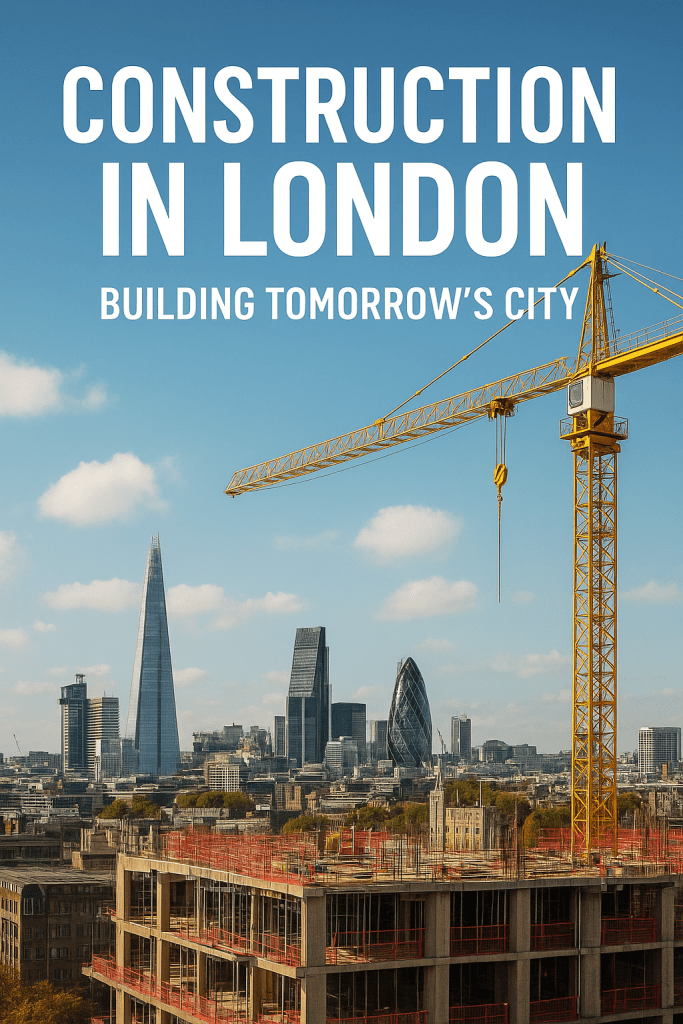
The Role of Construction in London’s Growth
Construction is one of London’s most vital industries, contributing billions of pounds to the economy and employing a vast workforce. With London’s population exceeding 9 million residents, the demand for housing, transport, healthcare facilities, and commercial spaces continues to rise.
London faces a unique challenge. It must preserve its historic fabric while meeting the needs of a modern global capital. Every development, from skyscrapers to transport hubs, is carefully considered to respect both heritage and progress.
Landmark Projects Transforming the Capital
Over the past decade, several major projects have reshaped the city:
- The Elizabeth Line (Crossrail): A £19 billion infrastructure project, expanding London’s transport capacity and connecting previously isolated areas.
- Battersea Power Station Redevelopment: Reviving an industrial icon into a vibrant hub for living, shopping, and business.
- Housing Regeneration Schemes: Boroughs such as Newham, Hackney, and Southwark are leading on large-scale residential projects to ease housing shortages.
These projects highlight the sector’s ability to blend functionality, innovation, and aesthetics. They meet both local and international expectations.

Sustainability and Innovation at the Core
With the UK’s net-zero carbon target for 2050, construction in London is undergoing a green transformation. Developers are adopting eco-friendly building materials, smart technologies, and designs that lower emissions and energy use.
Emerging methods such as modular construction and Building Information Modelling (BIM) are also gaining traction. These not only reduce construction timelines but also increase precision and minimise waste.
Sustainability has become more than a regulatory requirement—it is now a marker of quality and forward-thinking design.
Challenges Facing London’s Construction Industry
Despite its successes, the industry is under pressure from multiple directions:
- Housing Affordability: Supply continues to lag behind demand, especially for affordable homes.
- Rising Costs: Inflation, material shortages, and a scarcity of skilled labour have raised project costs.
- Regulatory Complexity: Navigating planning laws in a city with centuries of heritage is often time-consuming.
- Environmental Responsibilities: Achieving sustainability goals requires significant investment and innovation.
 GJAT Construction
Leave a comment